Why Hire a Professional for Bush Removal in Honesdale, PA?
An old bush can go from being a nice part of your landscaping to a serious headache faster than you might expect. Maybe it has grown over a walkway. Maybe its branches are pressing against your siding. Or perhaps you cut it back every year, only to watch it return thicker and more unruly the following spring.
For homeowners considering bush removal in Honesdale, PA, the bigger question is often whether the job is really worth hiring a professional to handle. After all, how difficult can removing a bush be?
Quite difficult, as it turns out.
What you see above ground is only part of the plant. Established shrubs can have dense branches, heavy root systems, stubborn stumps, and roots extending beneath surrounding landscaping. Removing all of that without damaging your lawn, nearby plants, utilities, hardscaping, or your own back is a different job from simply cutting off a few branches.
Here in Honesdale, our changing Pennsylvania seasons add another layer to the equation. Wet periods, freezing winters, summer growth, rocky soil conditions, and mature landscaping can all affect how a shrub should be removed.
At SGJ Landscaping, we believe homeowners should understand what goes into the job before deciding how to approach it. Here's what you need to know.
Why Homeowners in Honesdale Remove Bushes
There's nothing wrong with having mature shrubs. Healthy, appropriately placed bushes can add texture, privacy, seasonal color, and curb appeal to your property.
The problem comes when a bush is unhealthy, poorly located, overgrown, or simply no longer works with your landscape.
You may consider removal when a bush:
Has become too large for its location
Is dead or declining
Blocks windows, doors, sidewalks, or driveways
Interferes with other landscaping
Has become difficult to maintain
Keeps growing against your home
Is taking over a garden bed
Has suffered major storm or winter damage
Is being removed as part of a landscape renovation
Has an aggressive or difficult root system
Creates poor visibility near a driveway or walkway
No longer fits the appearance you want for your property
Sometimes the issue is practical. Other times, you simply want to open up your yard and start fresh.
Either way, removing the entire shrub correctly gives you much more flexibility than repeatedly cutting back something you no longer want.
Bush Removal Is More Than Cutting Down Branches
One of the biggest misconceptions about shrub removal is that the visible portion of the plant is the whole job.
You can cut a bush down to ground level surprisingly quickly. The hard part often starts afterward.
The Root System Still Matters
A mature shrub may have been growing in the same location for ten, twenty, or even more years. During that time, it has developed a substantial underground root structure.
Simply cutting the stems doesn't necessarily eliminate that structure.
Depending on the species, remaining roots or a stump may produce new shoots. Even when regrowth isn't a concern, leaving a large root mass behind can interfere with whatever you want to do with that area next.
If you're planning to install new grass, create a flower bed, plant another shrub, or change the layout of the property, proper removal becomes especially important.
Established Bushes Can Be Surprisingly Heavy
A mature shrub doesn't look particularly heavy while it's standing in your yard.
Start cutting it apart and digging around the root ball, however, and the weight becomes obvious.
Branches, trunks, roots, and attached soil add up quickly. What begins as a weekend DIY project can turn into hours of cutting, digging, pulling, lifting, and hauling.
Professional equipment and experience make a major difference.
Why Professional Bush Removal in Honesdale, PA Makes Sense
Hiring someone for professional bush removal in Honesdale, PA isn't simply about avoiding physical work. You're paying for a controlled process designed to remove the unwanted vegetation while limiting unnecessary disturbance to the rest of your property.
Professionals Know What They're Looking At
Not every bush grows the same way.
Different species develop different root structures, stem patterns, sizes, and growth habits. An experienced landscaping team can look at the shrub, its condition, its surroundings, and its location before deciding how to approach removal.
That matters because a small ornamental shrub beside an open lawn is one situation. A mature, multi-stemmed bush squeezed between your foundation, walkway, and established flower bed is something entirely different.
The removal method needs to match the property.
You Reduce the Risk of Property Damage
This is one of the strongest reasons to avoid treating bush removal as nothing more than a pulling contest.
Roots can grow around or near:
Walkways
Retaining walls
Fences
Foundations
Irrigation components
Landscape edging
Other plants
Underground utility areas
Aggressively pulling a deeply rooted shrub without understanding what's around it can create additional problems.
A professional approach focuses on controlled removal rather than simply applying as much force as possible.
Underground Utilities Need to Be Considered
Any landscaping project involving digging should begin with awareness of what may be underground.
Pennsylvania homeowners have access to the state's PA One Call system, commonly known as 811, for underground utility marking before any excavation work begins. This is especially important when work will disturb soil beyond very shallow surface maintenance.
You should never assume that an area is safe to dig simply because you've never seen utility work there.
Electric, communication, gas, water, and other lines may be located underground. Private lines and systems can require additional consideration as well.
Professional landscapers understand that evaluating the work area is an important part of planning the job.
Honesdale's Seasons Can Affect Bush Removal
Living in northeastern Pennsylvania means your landscaping experiences a little bit of everything.
Honesdale gets freezing winter weather, snow, spring moisture, warm summer growing conditions, and plenty of seasonal changes. Those conditions influence both plants and soil.
Wet Soil Changes Working Conditions
After prolonged rain or spring thaw, saturated soil can become muddy and easily disturbed.
That doesn't automatically mean a shrub can't be removed, but conditions should be considered carefully. Heavy equipment or repeated foot traffic across wet ground can create unnecessary lawn damage.
Frozen Ground Presents a Different Challenge
When the ground freezes, digging becomes considerably more difficult.
A bush that would be manageable under favorable soil conditions can become much harder to remove once the surrounding ground is frozen solid.
Planning landscape projects at the right time can make the process more efficient.
Growing Season Can Reveal Problems
Spring and summer often make unhealthy or unwanted shrubs especially noticeable.
Perhaps one shrub fails to leaf out while everything around it turns green. Maybe rapid summer growth causes branches to block a window or walkway again.
Seasonal growth can help you identify which plants still belong in your landscape and which ones have become more trouble than they're worth.
Professional Removal Can Help Prevent Unwanted Regrowth
Have you ever cut a shrub almost to the ground and thought the problem was solved?
Then spring arrives.
Suddenly, new shoots appear.
Certain woody plants can respond aggressively to being cut. If the root crown or other viable portions remain, simply removing the top growth may not provide the permanent result you expected.
That's why there's an important difference between cutting back a bush and removing a bush.
If your goal is complete removal, the work needs to address the appropriate underground portion of the plant as well.
Bush Removal Can Improve Your Home's Curb Appeal
Sometimes you don't realize how much an overgrown shrub dominates your property until it's gone.
Large bushes can hide attractive architectural details, cover windows, make entrances feel cramped, and give otherwise maintained landscaping an untidy appearance.
Removing the right shrubs can create:
Cleaner sightlines
More visible windows
Better-defined planting beds
A more open entrance
Improved lawn space
Better balance between plants
Room for updated landscaping
This doesn't mean every mature shrub should disappear. Quite the opposite.
Good landscaping is about keeping plants that work and making thoughtful changes to those that don't.
Removal Can Create Space for a Better Landscape
Bush removal is often the first step rather than the final one.
Once an unwanted shrub and its root system are out of the way, you can begin thinking about how the space should function going forward.
You might want to install grass, plant a smaller shrub, expand an existing flower bed, improve visibility, simplify maintenance, or completely redesign that part of your landscape.
This is another advantage of having removal performed properly. You're not just trying to make the bush disappear above ground. You're preparing the area for whatever comes next.
Why DIY Bush Removal Can Become Expensive
DIY removal looks inexpensive when you're standing in the hardware store looking at a shovel.
Then the project begins.
Depending on the shrub, you could find yourself needing saws, pruning tools, digging equipment, chains, hauling equipment, protective gear, or other tools. You also have to deal with the debris afterward.
More importantly, mistakes have a cost.
Damaging a nearby plant, lawn area, fence, walkway, landscape feature, or underground component can turn a money-saving project into an expensive repair.
There's also your time to consider.
If you spend an entire weekend fighting one established root ball, how much did you really save?
Professional Equipment Makes a Difference
Tools don't replace experience, but the correct equipment can make difficult landscaping work much more efficient.
The exact equipment required depends on the bush's size, species, location, accessibility, and root structure. A professional landscaping crew can select equipment that fits the job rather than trying to make one tool work for every situation.
This is particularly useful when multiple bushes need removal.
What could become several weekends of homeowner labor can often be approached much more efficiently by an experienced crew with the proper equipment.
The Best Manufacturers of Professional Bush Removal Equipment
Reliable professional equipment helps landscaping crews complete demanding removals efficiently, safely, and accurately while reducing unnecessary disruption throughout your surrounding property.
Some of the best-known manufacturers of landscaping and outdoor power equipment include:
Bandit Industries – Produces powerful stump grinding equipment with excellent cutting capability and dependable long-term reliability.
Rayco – Well-respected manufacturer offering innovative stump grinders designed for productivity, maneuverability, and professional-grade performance.
Toro – Provides compact stump grinding equipment ideal for residential properties with restricted access points.
Equipment is only part of the equation, though. The person operating it matters just as much.
What Happens During Professional Bush Removal?
Every property is different, but professional removal generally follows a logical process.
The Area Is Evaluated
Before cutting begins, the crew needs to understand what they're dealing with.
That includes the bush itself and everything surrounding it.
The team can consider its size, location, access, nearby structures, landscaping, utilities, and the homeowner's plans for the area afterward.
The Above-Ground Growth Is Controlled
Large shrubs are typically reduced in a manageable way instead of being attacked all at once.
Branches and stems may be cut into smaller sections so the crew can work safely and keep debris under control.
The Root Area Is Addressed
Once the upper growth is out of the way, attention turns below ground.
The exact approach depends heavily on the shrub and site conditions. Roots may need to be exposed, cut, loosened, or otherwise removed sufficiently for the project's goals.
Debris Is Managed
Don't underestimate this part.
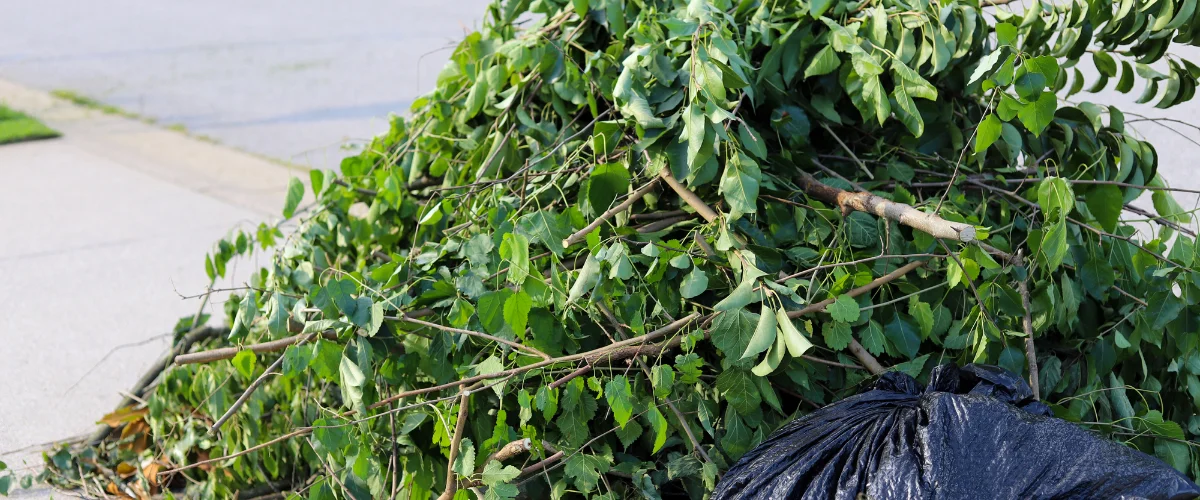
A mature shrub can create a surprisingly large pile of branches, stems, roots, and soil-covered material. Having a plan for debris is an important part of completing the project instead of leaving your property with another problem to solve.
The Area Is Prepared for What Comes Next
Your plans matter.
If you're installing grass, creating another bed, or preparing for new landscaping, let your landscaping team know. Removal can then be approached with the next stage of the property in mind.
When Is the Best Time to Remove a Bush in Honesdale?
There isn't one perfect month for every removal.
Bushes can often be removed during different parts of the year when soil, weather, access, and property conditions are suitable. However, extremely wet or frozen conditions can make digging and soil work more difficult.
If you're already planning a spring or fall landscaping project, arranging unwanted shrub removal as part of the overall project can make sense.
You also don't necessarily need to wait for a struggling shrub to die completely.
If you already know the plant needs to go, addressing it before it grows larger may make the eventual project easier.
Should You Remove or Prune the Bush?
Not every overgrown shrub needs to be removed.
Sometimes pruning is the better answer.
Consider keeping and pruning a bush when it is healthy, appropriately located, structurally manageable, and still fits your landscaping goals.
Removal becomes more attractive when the plant is:
In the wrong location
Repeatedly overgrowing its available space
Severely damaged
Dead or declining
Interfering with access
Creating maintenance problems
No longer wanted in the landscape
If you're uncertain, an experienced landscaper can help you look at the bigger picture rather than automatically choosing the most aggressive option.
Don't Forget What Happens After the Bush Is Gone
This is an important part of the project homeowners sometimes overlook.
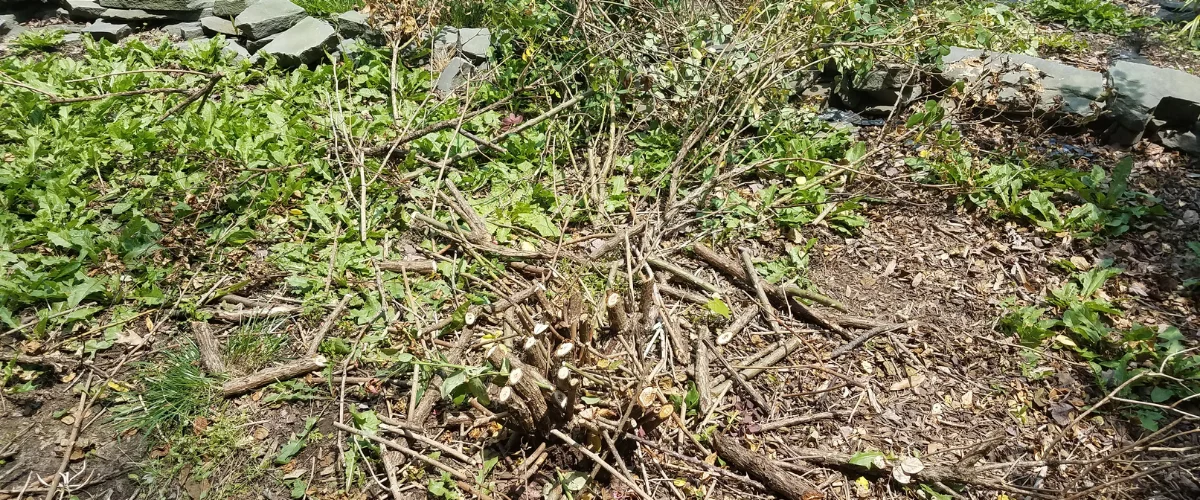
Removing a bush leaves a space.
What happens there next?
If you haven't thought about that question yet, consider whether you want lawn, mulch, another plant, a larger garden bed, or an entirely different landscape design.
You should also think about why the original bush became a problem.
If it simply grew too large for the available area, replacing it with another plant that reaches the same mature size could eventually recreate the exact issue.
Choosing future plants based on their mature height and width can save you considerable maintenance later.
Professional Bush Removal Can Save You Time and Physical Effort
Digging out established roots is demanding work.
Even relatively small shrubs can require repeated digging, cutting, pulling, and lifting. Larger specimens can be considerably more challenging.
For many homeowners, this alone makes professional removal worthwhile.
Instead of spending your weekend digging around roots and trying to figure out how you're going to haul away a mountain of branches, you can have experienced professionals handle the demanding work.
That's especially valuable if you have several bushes to remove at once.
Choose an Experienced Bush Removal Team in Honesdale
Our team at SGJ Landscaping has provided professional landscaping services for years, bringing practical experience and care to every bush removal project we handle.
As with most things in life, working with experienced professionals helps you get better results and can save money over the long run by avoiding preventable mistakes. If you're ready to have your project tackled by our team of industry experts, contact SGJ Landscaping at [cgv tel] or (570) 903-2744 so we can get started.
Frequently Asked Questions About Bush Removal in Honesdale, PA
How much does bush removal cost in Honesdale, PA?
The cost depends on the size and number of bushes, root systems, accessibility, surrounding landscaping, site conditions, and the amount of labor required.
A small shrub in an open area will generally be much easier to remove than a large, mature bush growing beside a foundation or hardscape. The best way to determine your project's cost is to have the actual property and work evaluated.
Do you remove the roots when removing a bush?
Root removal depends on the plant, site, and what you plan to do with the area afterward.
For complete bush removal, addressing the root crown and major root structure is often important. Simply cutting the stems at ground level may allow certain plants to regrow and can leave obstacles behind for future landscaping.
Can a bush grow back after being cut down?
Yes. Some shrubs and woody plants can produce new growth from remaining roots, crowns, or stumps.
That's why cutting and removal aren't always the same service. If you want the plant permanently removed, tell your landscaping team so the project can be planned accordingly.
What is the best time of year for bush removal?
Bush removal can be completed during various times of the year when site and soil conditions allow it.
In Honesdale, frozen winter ground and extremely wet conditions can make digging more difficult. Spring, summer, and fall may all offer suitable opportunities depending on weather, property access, and the specific project.
Can you remove bushes that are close to my house?
Bushes growing near homes can often be removed, but these situations require additional care.
Roots, siding, foundations, windows, utility lines, walkways, and surrounding landscaping all need to be considered. Tight locations are one of the strongest reasons to use an experienced professional rather than trying to pull the shrub out yourself.
Should I remove an overgrown bush or just trim it?
That depends on the plant and your goals.
If the bush is healthy and has enough space, professional pruning may restore a manageable shape. If it constantly outgrows its location, is declining, blocks access, or no longer fits your landscaping plan, removal may provide a better long-term solution.
What can I put in the area after a bush is removed?
You have plenty of options.
Depending on soil conditions, sunlight, drainage, and available space, you might install grass, mulch, flowers, groundcover, or another appropriately sized shrub. Thinking about the mature size of replacement plants can help you avoid future overcrowding.
Do I need to worry about underground utilities before bush removal?
Yes, especially when removal requires digging.
Underground utilities should always be considered before excavation. Pennsylvania's 811 system helps coordinate the marking of participating underground utility lines before qualifying digging projects. Private utilities or property features may require additional attention, so underground conditions should never simply be guessed.
Give Your Honesdale Landscape a Fresh Start
An unwanted bush may look like a relatively minor landscaping problem, but complete removal can involve much more than cutting off a few branches. Roots, underground utilities, nearby structures, soil conditions, debris, access, and your plans for the space all deserve consideration.
That's particularly true here in northeastern Pennsylvania, where changing seasons, winter freezes, spring moisture, and established residential landscapes can make outdoor projects more complicated than they first appear.
Professional bush removal in Honesdale, PA gives you a cleaner path forward. Whether you're dealing with one stubborn shrub or clearing several overgrown bushes as part of a larger landscape update, proper removal can save you time, reduce unnecessary property damage, and prepare the area for whatever you want to do next.
If you're ready to reclaim that part of your yard, contact us at (570) 903-2744. Tell us what's giving you trouble, and let's talk about the best way to tackle your bush removal project.